
Cluster feeding: what it looks like in your feed log, and when to call
Cluster feeding is when a baby wants lots of feeds close together over a few hours, often in the late afternoon or evening. The Australian Breastfeeding Association says it's common and isn't usually a sign of low milk supply. In a feed log it shows up as several entries close together. If you're worried, talk to your midwife, child health nurse or GP.
We make Milkstop, so weigh our view accordingly.
Feeding again, and again, tonight? You're not alone. Evenings like this are hard work, and it helps to know what the health sites say and what it looks like on paper (or on your phone).
What is cluster feeding?
The Australian Breastfeeding Association describes cluster feeding as a young baby's feeds being very frequent, or "clustered" together, often in the evening or the early hours of the morning, and common in the first few months. Pregnancy, Birth and Baby calls it a normal and common behaviour: lots of short feeds over a few hours.
Pregnancy, Birth and Baby says that if your baby is cluster feeding, they might also:
- have short rests or sleeps between these feeds
- feed for a few minutes and then pull off and on the breast
- cry and are fussy during this time
Cluster feeding can also come with growth spurts. See Pregnancy, Birth and Baby and Raising Children Network for more.
What it looks like in your feed log
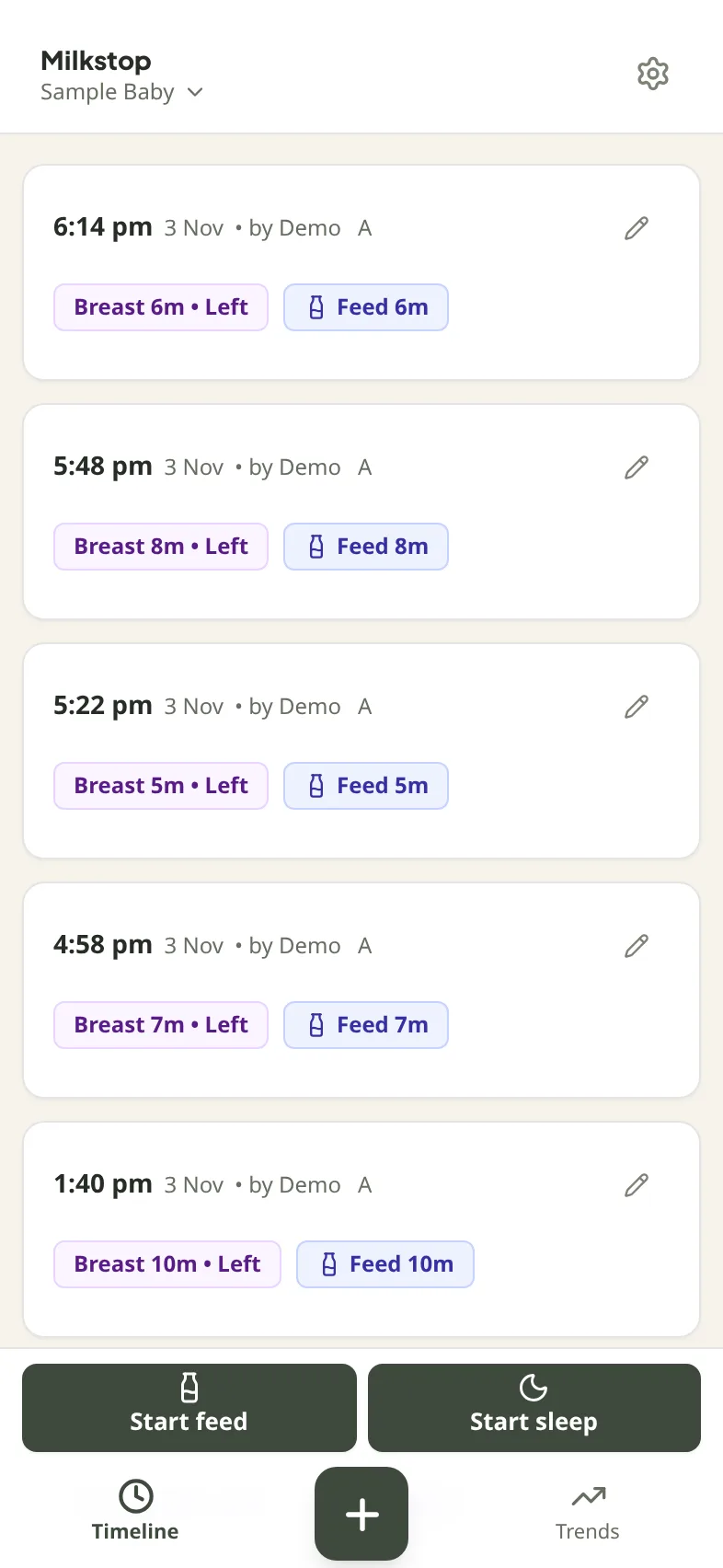
In Milkstop's timeline, a cluster is several breastfeeds listed close together, often followed by a longer stretch. Milkstop doesn't group them or label them. It's your log, in order.
Example only, not a guide to how often your baby should feed
- Evening: breastfeed, left
- Breastfeed, right. Note: "on and off, fussy"
- Breastfeed, left
- Breastfeed, right
- …then a longer stretch
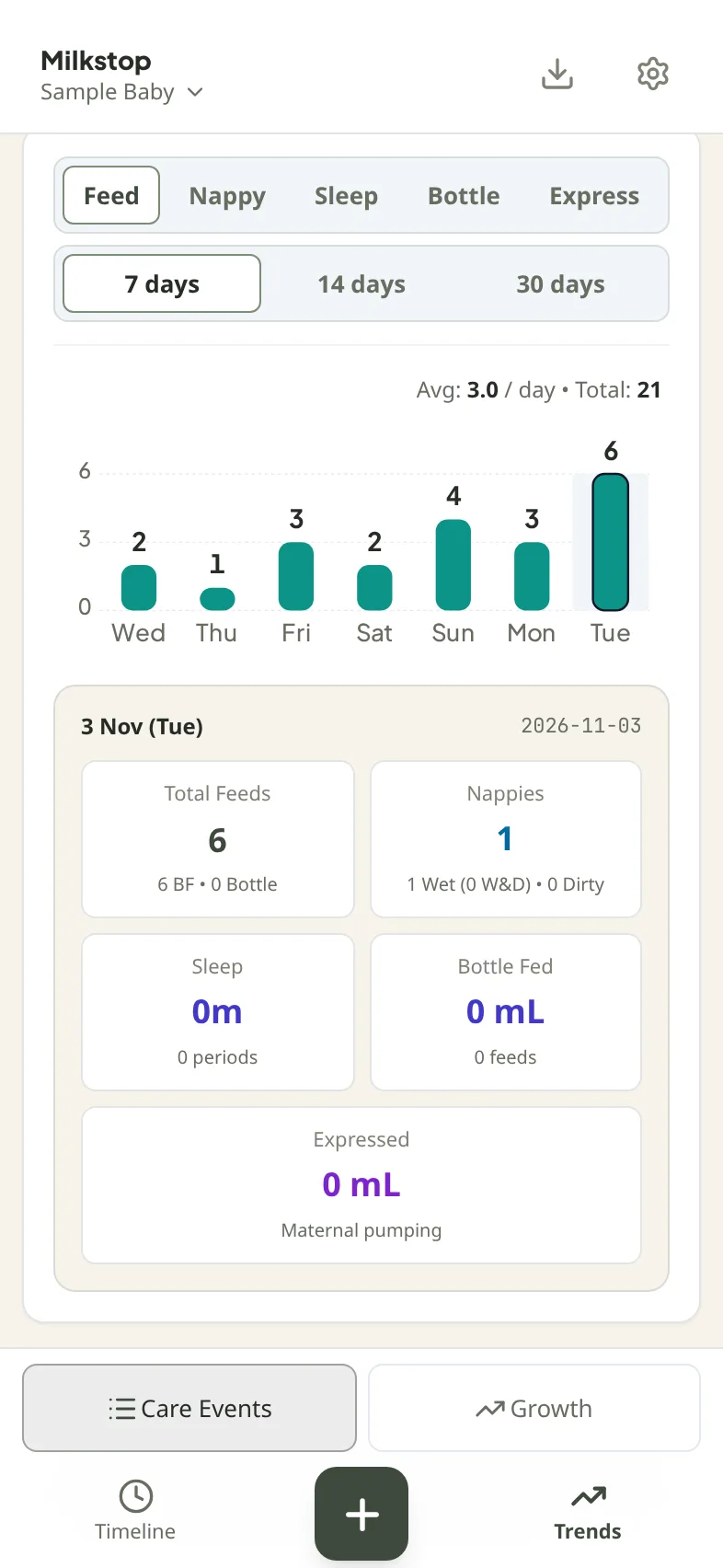
Trends shows daily counts, totals and averages, so you can look back over a week. A log helps you notice patterns and show them to your midwife or child health nurse. It doesn't diagnose anything.
Logging cluster feeds without stress
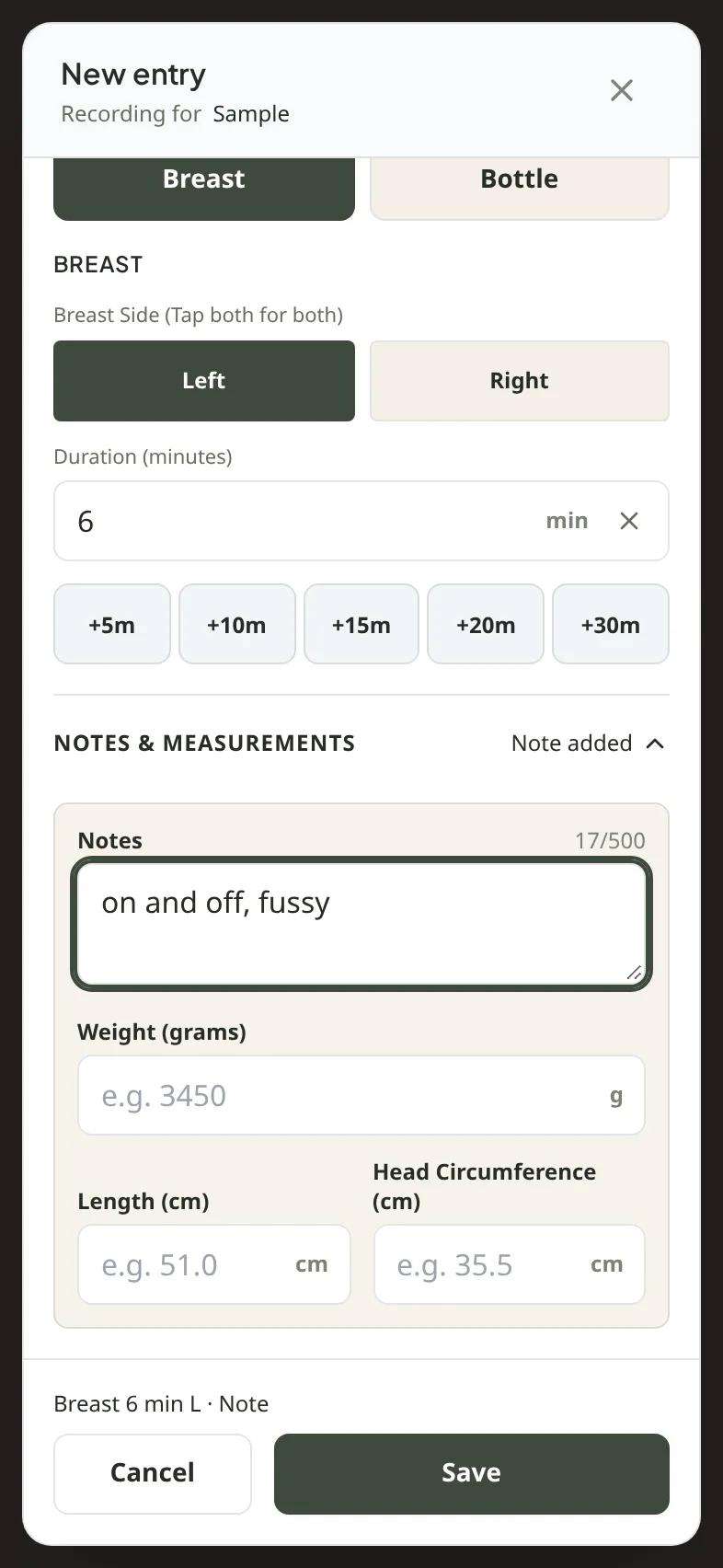
You don't need exact timings for every latch. Log each feed as it happens, or jot it in the notes ("on and off, fussy") and move on. See feed notes.
Forgot to log one? Add it afterwards: Log something > set the Date and Time > What to log: Feed > Feed type: Breast > side and/or minutes > Notes > Save. A breastfeed needs a side or minutes. Notes on their own save as a plain note.
Bottle feeds go in the same timeline. More in the breastfeeding tracker guide.
Sharing the evening with a partner
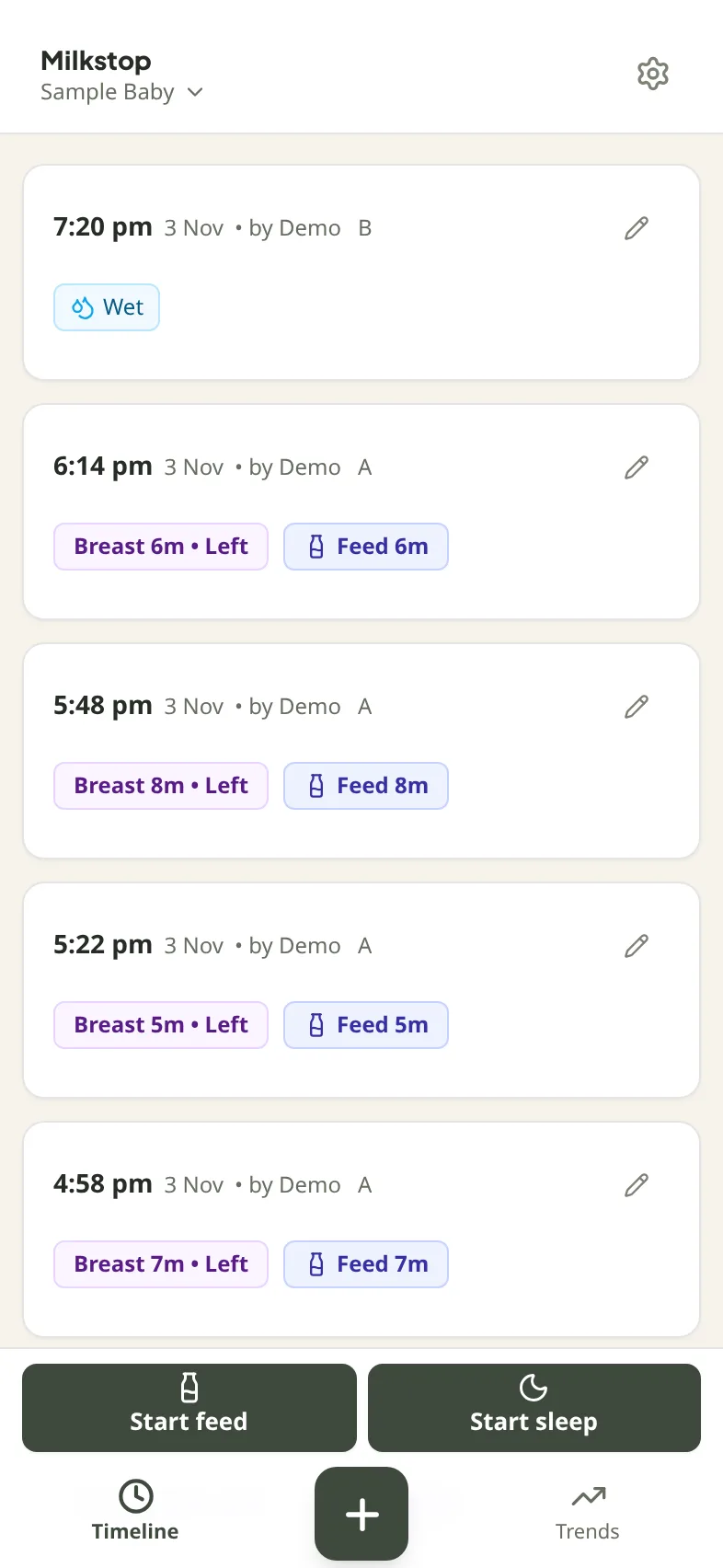
While one of you feeds, the other can take nappies, settling and dinner, and log them on their own phone in the same household. Invite as many caregivers as you like.
Your partner's entries appear when you come back to Milkstop, or pull down on the log to refresh.
Your full history stays in the log, for every caregiver. See share your baby log with your partner and split night feeds with your partner.
When to call your midwife, child health nurse or GP
From Pregnancy, Birth and Baby:
Talk to your nurse, midwife or doctor if your baby:
- is not gaining weight
- is not producing wet and dirty nappies
- is not settling after they have finished feeding
You can also call:
- Australian Breastfeeding Association Breastfeeding Helpline: 1800 686 268
- healthdirect: 1800 022 222
- In an emergency, call 000.
Related guide
FAQs
Is it normal for my newborn to feed every hour?
Lots of babies have stretches of feeding close together, especially in the evening, and health sites say this is common. Every baby is different, so if you're worried, talk to your midwife, child health nurse or GP.
Does cluster feeding mean I don't have enough milk?
The Australian Breastfeeding Association says it isn't usually a sign of low milk supply. Your midwife or lactation consultant can check.
Can I cluster feed with formula?
UK guidance from the NHS says formula-fed babies can cluster feed too, and that it's important not to overfeed, so watch your baby and follow their cues. Talk to your midwife, child health nurse or GP before changing how much formula you give. See our bottle feed log.
Should I log every cluster feed?
Log what's useful to you. A quick note works fine.
Can my partner see the evening feeds?
Your partner's entries appear when you come back to Milkstop, or pull down on the log to refresh.
Does Milkstop tell me if my baby is cluster feeding?
Milkstop shows what you've logged. It doesn't label feeds as cluster feeding or tell you whether anything is wrong.
General information only. Milkstop is not intended to be a medical device and doesn't replace advice from your midwife, child health nurse, lactation consultant or doctor. If you're worried about your baby, contact a health professional. In an emergency call 000 (AU), 911 (US), 999 (UK) or 112 (EU).
Free · No subscriptions or feature paywalls · Works offline · iPhone app and web app