Triple feeding log: keeping track of breastfeeds, top-ups and expressing together
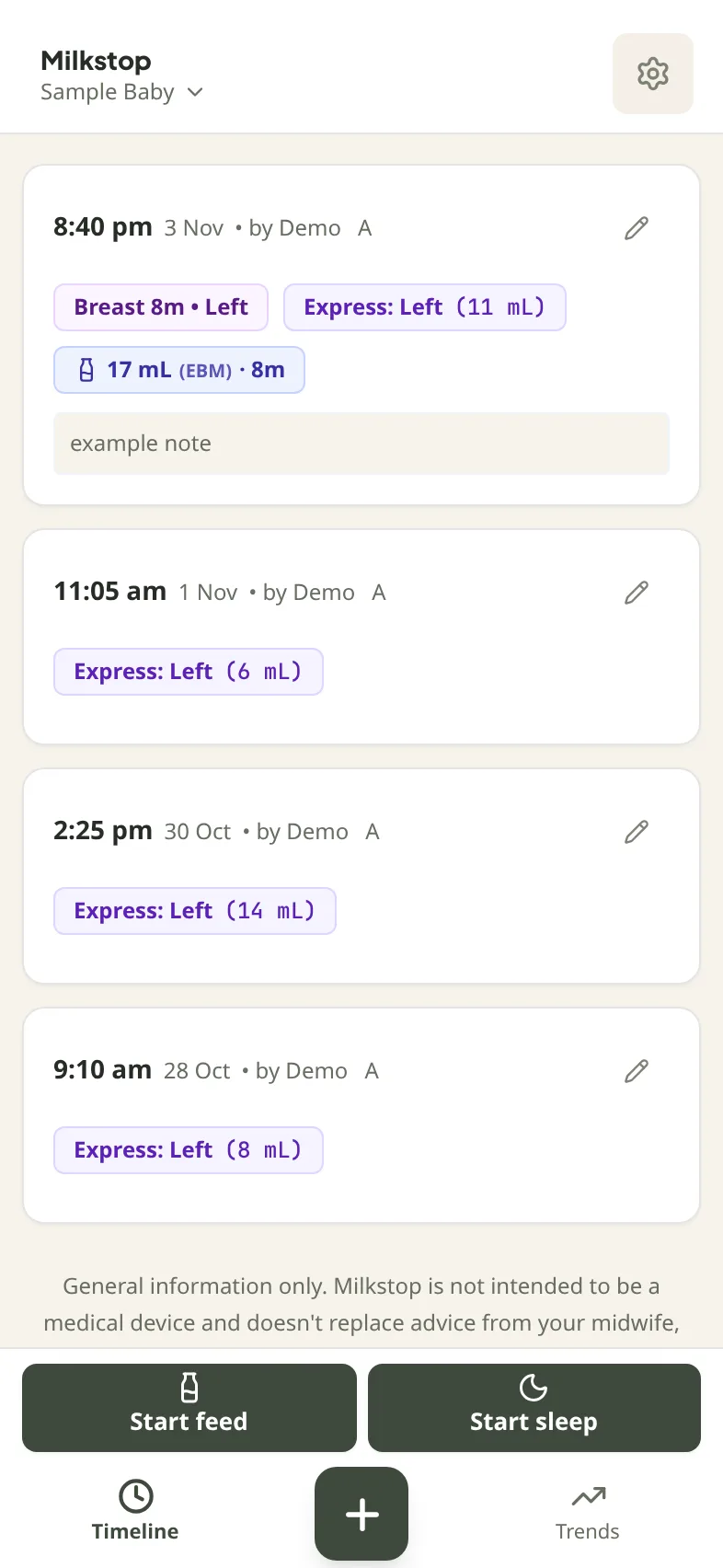
A triple feeding log records each round of your plan: the breastfeed, the top-up (expressed milk or formula, and how much your baby took) and the expressing session. Follow the plan your midwife, lactation consultant, child health nurse or GP gave you. In Milkstop, breastfeeds, bottles and expressing sit in one timeline that you and your partner can both log to.
We make Milkstop, so weigh our view accordingly.
Triple feeding is a lot of work. Every round has three steps, and by the second night it's hard to remember which side you started on or how much the last top-up was. A simple record takes that off your mind, and it gives your midwife or lactation consultant something to look at when they review the plan with you.
Follow your plan. This page is about keeping the record, not about how to triple feed. How often to feed, how much to top up and how long to express all come from your midwife, lactation consultant, child health nurse or GP.
What is triple feeding?
La Leche League Canada describes triple feeding as a short-term plan in which, at every feed, you breastfeed your baby, give a top-up of expressed milk (and sometimes formula), and then express for the next feed. See La Leche League Canada: Triple feeding, the Australian Breastfeeding Association and Raising Children Network for more.
How long do you triple feed for?
La Leche League Canada describes triple feeding as a short-term plan and suggests talking to your healthcare provider or a lactation consultant about it. How long you keep going is something to decide with them. (La Leche League Canada)
What to write down each round
Your health professional may ask for particular details. Here's a starting point:
- Breastfeed: the time, which side, and how long or a quick note.
- Top-up: the time, the milk (expressed milk or formula) and the amount, as your plan asks. Milkstop stores one bottle amount, so if your plan asks for both what you offered and what your baby took, put the other figure in the notes.
- Expressing (pumping): the time and any notes your plan asks for.
- Nappies, and anything else your professional asked you to note.
Example only
| Step | What you'd log |
|---|---|
| Breastfeed | Left side, [minutes from your plan] |
| Top-up | Expressed milk, [amount from your plan] |
| Expressing | Both sides, [amount expressed] |
Logging a round in Milkstop
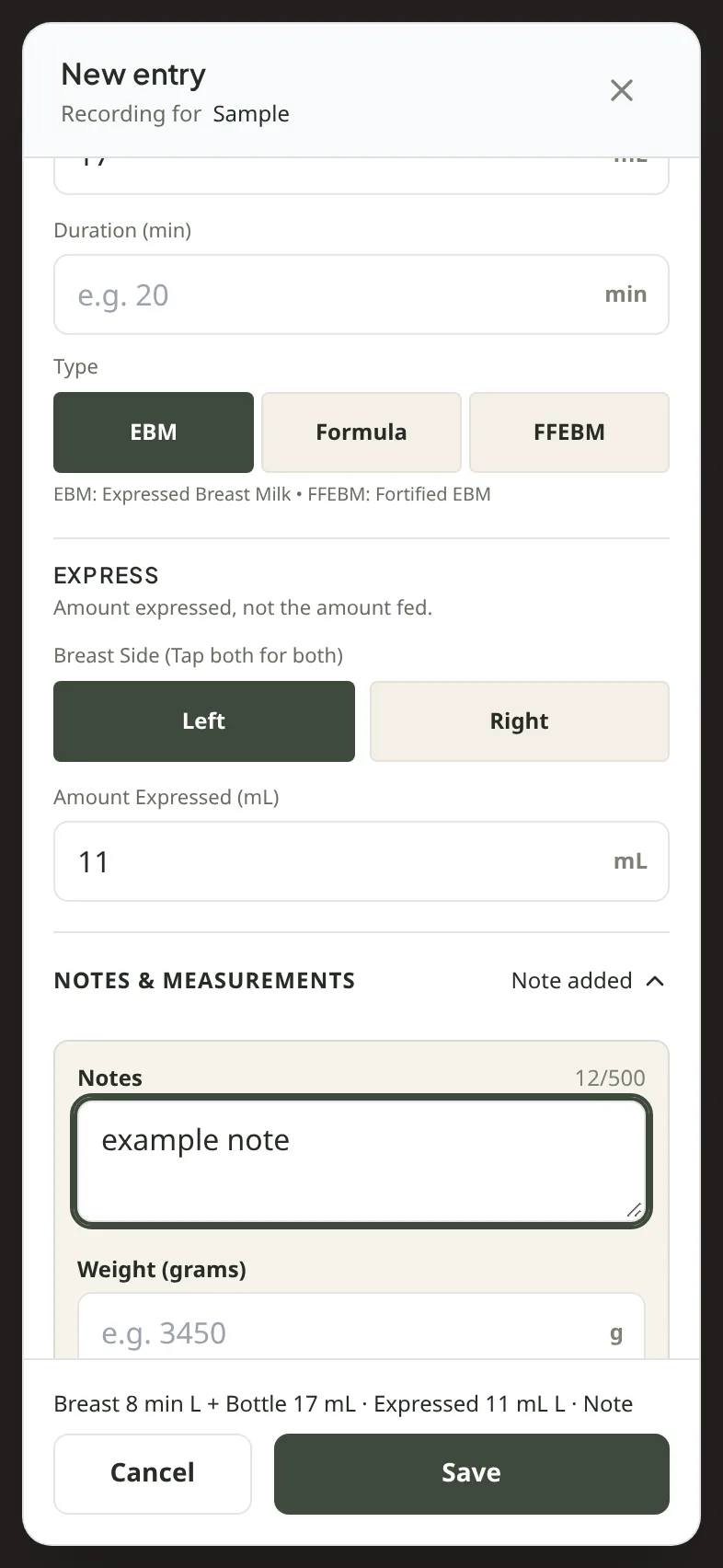
You can log the whole round in one entry. It can include the breastfeed (side and/or minutes), the bottle top-up (one amount, with the type set to EBM, formula or fortified EBM, and an optional duration) and the expressing session (amount, and left, right or both). If it's easier, log each step on its own instead.
The expressing amount is what you expressed, not what your baby was fed. The top-up amount is what goes in the bottle entry.
Use the Notes box for anything your plan asks you to watch, and see feed notes for ideas. The breastfeeding tracker and bottle and formula feed log pages cover each step in more detail.
Sharing the rounds with your partner
Triple feeding can be easier with two. One of you breastfeeds and expresses while the other gives the top-up and logs it on their own phone, in the same household.
Your partner's entries appear when you come back to Milkstop, or pull down on the log to refresh.
Invite as many caregivers as you like. Your full history stays in the log, for every caregiver. See share your baby log with your partner and split night feeds with your partner.
Taking the log to appointments
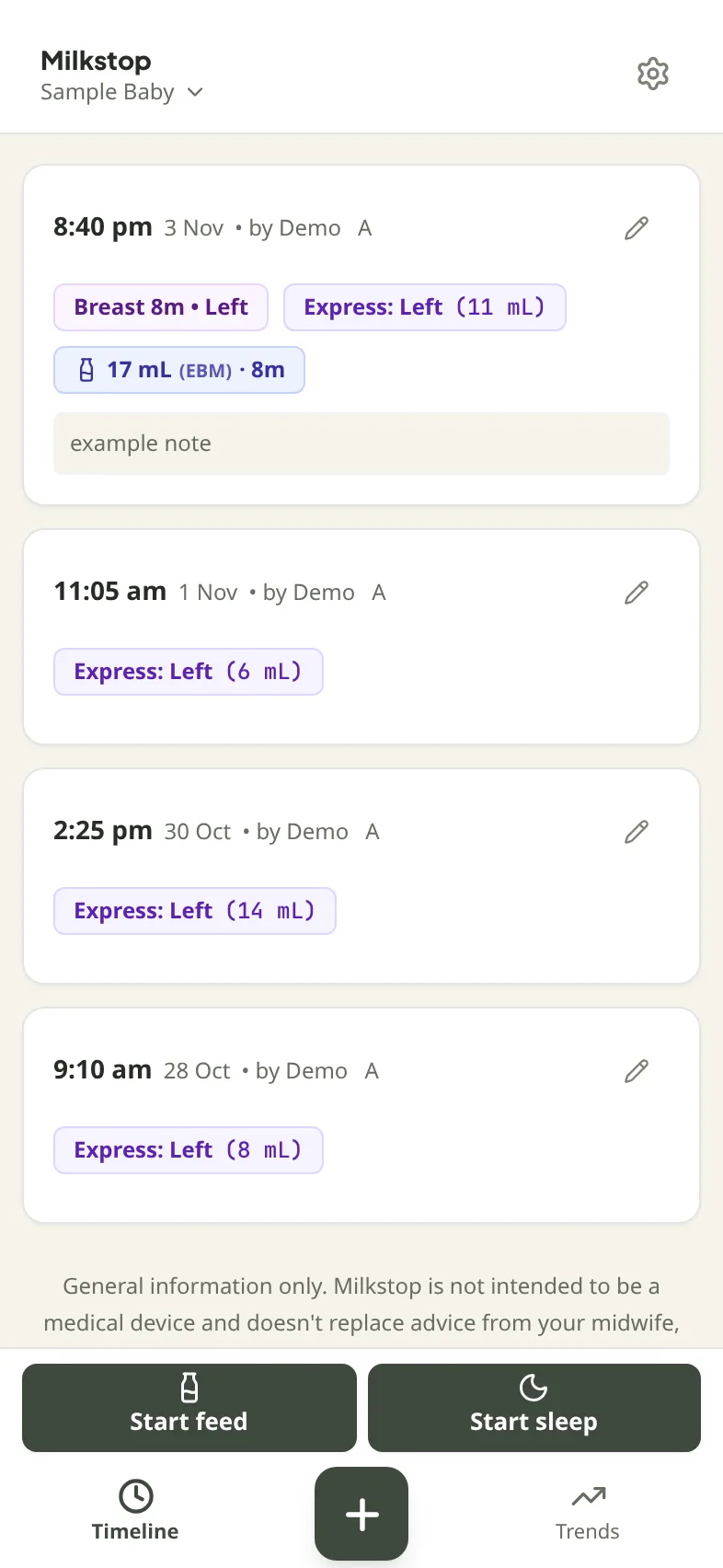
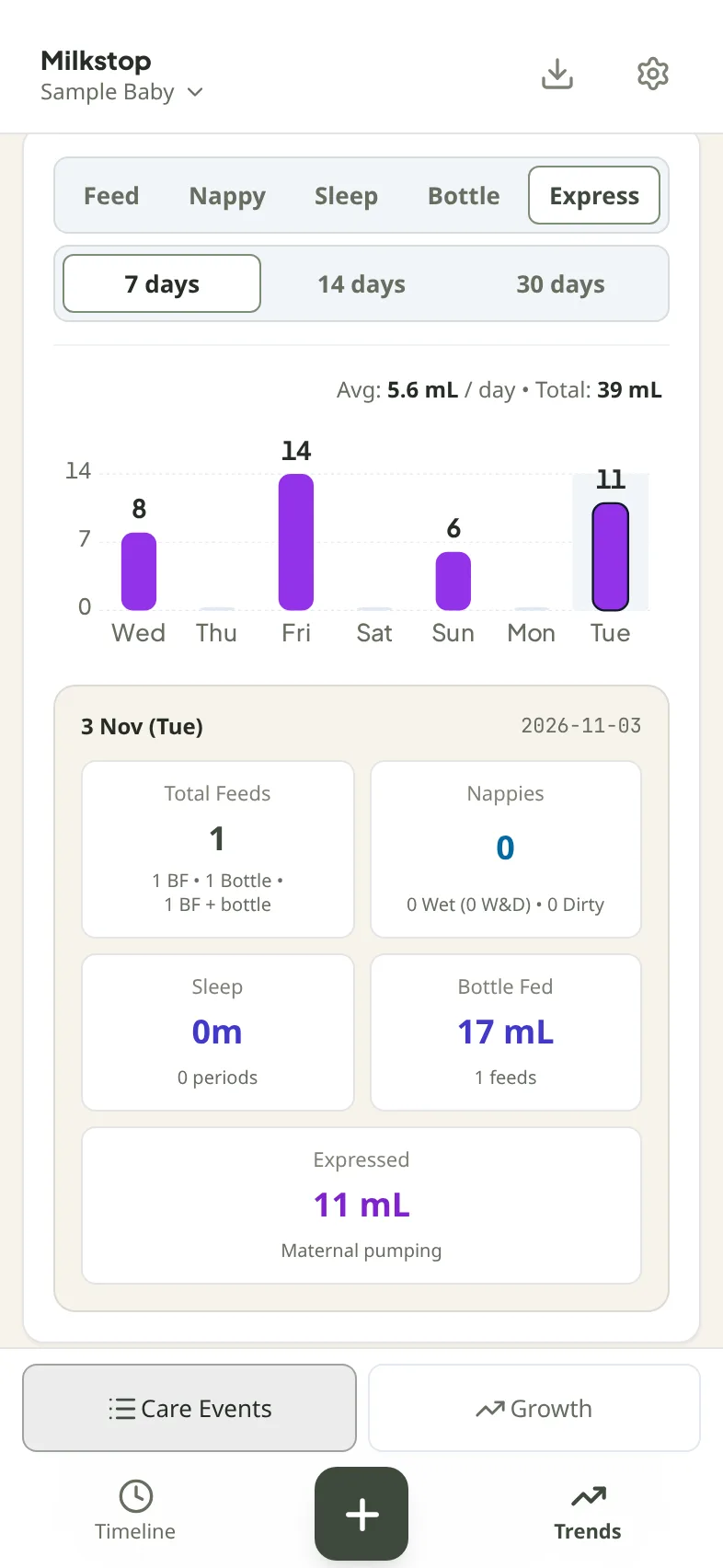
Trends shows daily counts, totals and averages for each type, which is handy to show your midwife or lactation consultant.
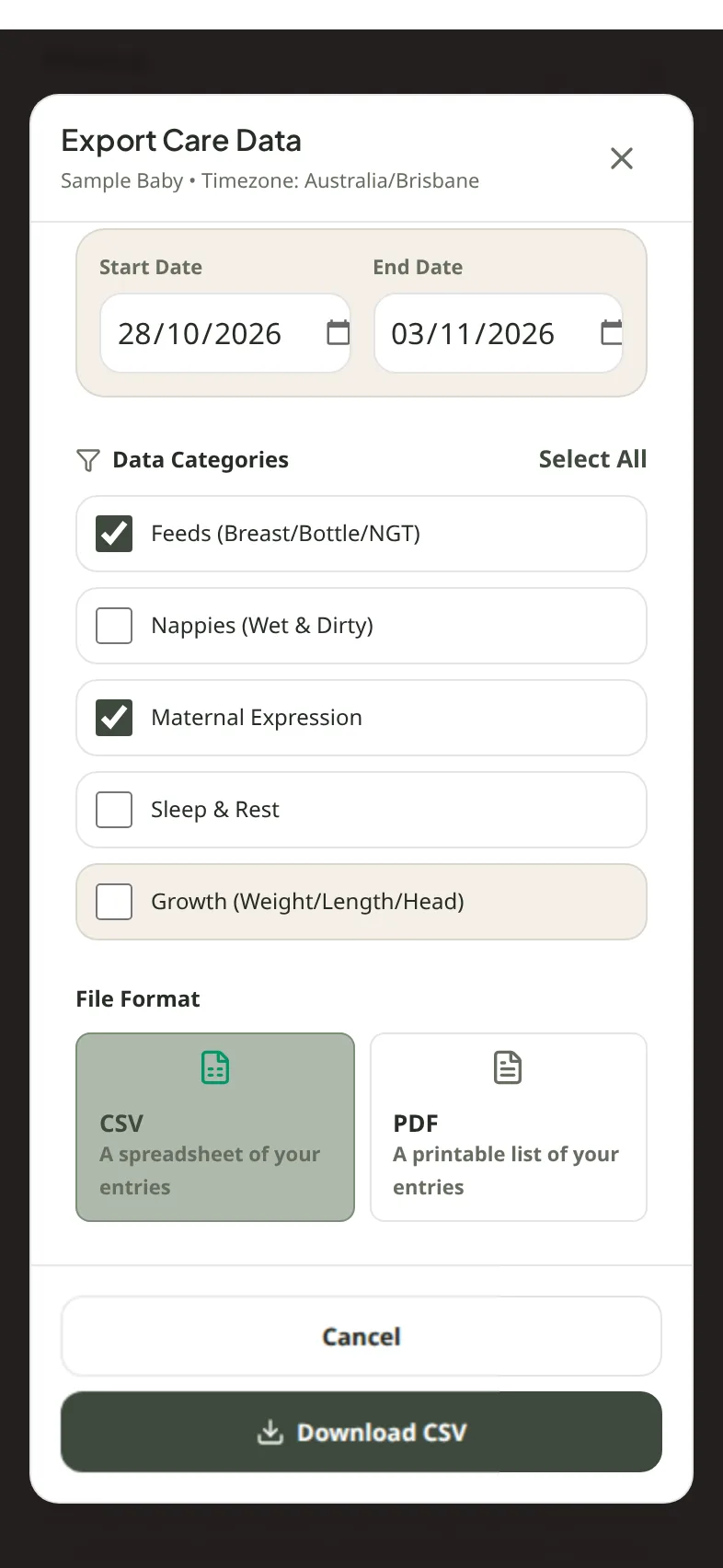
You can also export a date range as CSV, JSON or PDF. Exports are lists of entries, without totals. You can choose categories (feeds together, nappies, expressing, sleep, growth).
When to get help
If you have questions about the plan or you're worried about your baby, talk to your midwife, lactation consultant, child health nurse or GP.
- Australian Breastfeeding Association Breastfeeding Helpline: 1800 686 268
- healthdirect: 1800 022 222
- In an emergency, call 000.
Related guide
FAQs
Is Milkstop a triple feeding plan?
No. It's a log. Your plan comes from your midwife, lactation consultant or GP.
Can I log formula and expressed milk separately?
Yes. The bottle entry's type is EBM, formula or fortified EBM.
Can I log the breastfeed, top-up and expressing together?
Yes, you can log them in one entry.
Can two people log the same feed round?
Each caregiver logs on their own phone in the shared household. Your partner's entries appear when you come back to Milkstop, or pull down on the log to refresh.
What if I'm offline at 3am?
Entries save on the phone and upload when you're back online.
Does it cost anything?
Milkstop is free to use.
General information only. Milkstop is not intended to be a medical device and doesn't replace advice from your midwife, child health nurse, lactation consultant or doctor. If you're worried about your baby, contact a health professional. In an emergency call 000 (AU), 911 (US), 999 (UK) or 112 (EU).
Free · No subscriptions or feature paywalls · Works offline · iPhone app and web app